

Introduction to Delivery Route Planning
When a business that self-delivers orders plans out their delivery day, there are typically several key questions that need answering:
- Are their drivers taking the most efficient route to every stop, or are they relying on memory and local knowledge to plan their own way through the day?
- Are their vehicles arriving back at the depot each evening with spare capacity that was never used, having driven further than they needed to?
- Is every item needed to fulfil that day’s deliveries actually on the right vehicle before it leaves the warehouse?
- Are customers calling to ask where their delivery is, or complaining that the two-hour window you promised has come and gone with no sign of delivery?
If any of these questions sound familiar, it’s because logistics teams, like yours, are often in exactly the same position and lack the tools to efficiently address them.
Increased pressure on logistics teams
Fluctuating fuel prices, ongoing driver shortages and rising customer expectations around delivery accuracy, often referred to within logistics as the ‘Amazon effect’, have all put increasing pressure on delivery operations worldwide.
Customers now expect to know exactly when their order will arrive, and they share their delivery experience in the form of negative reviews and social media posts when it doesn’t as expected.
Delivery has quickly evolved from being just a back-office function into an important extension of a brand, with Amazon being one of the most notable points of reference of this evolution. In so many cases these days, the delivery experience and the person arriving on the doorstep with an order is the ONLY face-to-face contact point between the brand and the buyer.
Every late arrival, every vague ETA and every driver forced to double back on themselves erodes customer trust and adds (often) avoidable costs to an operation.
And operations that show an unwillingness to adapt or evolve when faced with these issues often get left behind. Despite this, many businesses still plan routes the way they always have – manually, reactively, and without a clear view of how decisions made at the planning stage affect the rest of the day.
This comprehensive guide explains and evaluates all of the key questions that form the basis of delivery route planning: what delivery route planning actually involves, how it works in practice, the factors a route plan needs to account for, the difference between manual and automated approaches, the mistakes that most commonly undermine efficient route planning, and how the concept applies across various key industries – from retail and food distribution to healthcare and builders merchants.
What is Delivery Route Planning?
Delivery route planning is the process of deciding which vehicle delivers to which stops, in what order, and at what time. It sits between two points in the operation: after an order or job has been confirmed, and before a driver sets off to deliver it.
But ‘route planning’ can mean different things depending on how it is implemented, so its meaning can tend to vary from business to business.
Manual route planning, for example, is where a business, typically through their logistics or transportation planner or manager, works out routes by hand using a map, local knowledge and personal experience.
It can work reasonably well for a small number of vehicles (under three in our experience) and stops, but it depends heavily on the skill (and ‘tribal’ knowledge) of the transport planner, which inherently creates a number of issues which will be highlighted throughout this guide.
Basic route planning usually involves tools like spreadsheets or standard (often commercial) mapping software, such as Google Maps or Waze to sequence delivery stops (we’ve even written a post on how to plan delivery routes in Google maps).
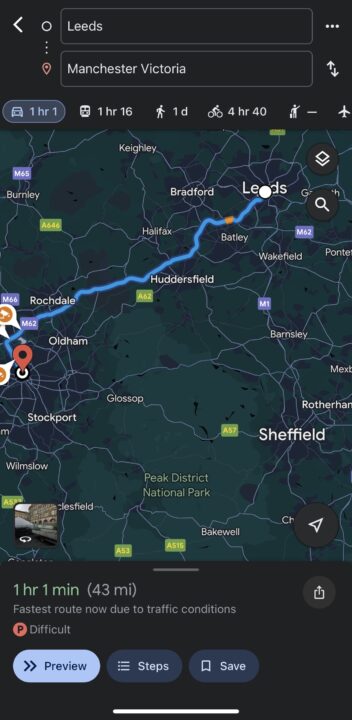
It’s a slight improvement from a purely manual route planning process, but it still relies on a person manually working through constraints and limitations of the platform, like the inability to plan time windows and account for vehicle type and vehicle capacity.
Automated route optimisation software, typically utilised by forward-thinking, modern logistics operations, uses algorithms to build delivery routes automatically, taking multiple variables into account, including vehicle capacity, delivery windows, driver hours, traffic, stop duration and more, all of which is calculated to an efficient set of stops and routes across an entire fleet, in just a few clicks.
Check out our post on What is route planning? for even more information.
Route planning vs. route optimisation – what’s the difference?
You may have found yourself asking, what’s the difference between route planning and route optimisation?
These two terms are often used interchangeably, but there’s a meaningful difference between the two.
Route planning is the fundamental process of creating a path and sequence of stops for a vehicle. Route optimisation, however, goes a step further: it uses algorithms to work out the most efficient version of that plan, weighing up variables such as distance, drive time, vehicle capacity, delivery windows and driver breaks all at once.
You can plan a route without optimising it, but you can’t optimise a route without planning it first, so one follows the other.
How route planning relates to fleet management, Transport Management Systems (TMS) and last-mile delivery
Route planning doesn’t operate in isolation. It’s one part of a wider set of systems and disciplines:
- Fleet management covers the vehicles themselves – maintenance, compliance, fuel and driver behaviour. Route planning determines what those vehicles do each day, while fleet management keeps them roadworthy and safe to operate.
- Transport Management Systems (TMS) are broader platforms that typically manage aspects such as freight movement, carrier selection and load planning, often with route planning as one module within a larger system – particularly for businesses managing complex, multi-leg transport.
- Last-mile delivery management – this specifically covers the final leg of the journey, from depot or store to the customer’s door. Route planning is one of its core components, alongside proof of delivery, customer notifications and driver tracking.
The key components of a route plan
An effective route plan depends on several pieces of information being aligned correctly. Starting first and foremost with accurate addresses and geocoding – if a location is wrong, everything built on top of it will be wrong too.
Once address and location information is accurate, a route plan needs to account for the delivery windows promised to customers (if a business offers them), any vehicle-specific constraints such as height, weight or temperature control, and the driver schedules that determine shift length and legally required breaks. If any of these aspects are missed or ignored, an efficiently planned route can face issues on the road.
Why Businesses Use Delivery Route Planning: Benefits & Impact
Effective route planning affects far more than the route itself. Because it sits at the centre of a delivery operation, improvements at the planning stage tend to create measurable gains right across the business, including the back-office.

Reduce mileage and fuel costs
Every unplanned and therefore unnecessary mile driven costs money twice over: once in fuel, and again in vehicle wear. And potentially a third time in additional driver shifts.
Route planning minimises the amount of distance driven without a revenue-generating stop attached, also known as ‘empty miles’, commonly caused by backtracking to a missed delivery or driving a longer route because stops were not sequenced logically or efficiently.
By grouping deliveries geographically and sequencing them in a logical order, route planning directly reduces the total distance a fleet needs to drive to complete the same number of jobs or stops.
Increase the number of deliveries per vehicle
When a route is built around the shortest, most logical path between stops, rather than the order in which orders happen to be processed, drivers spend less time driving between illogical stop sequences and more time actually delivering.
That extra capacity means more drops can be completed within the same shift, without adding additional vehicles or needing extra drivers.
Improve driver productivity
Poorly planned routes often mean drivers spend time working things out for themselves: which stop to do next, how to get there, or what to do when a delivery window has already passed.
A thoroughly calculated route plan removes that guesswork, giving drivers a clear, sequenced list of stops with realistic timings, meaning less time is lost to indecision and more time is spent on the roads delivering.
Improve on-time delivery performance
On-time performance depends on realistic planning, not optimistic planning. Automated route planning accounts for drive times, expected stop duration and traffic conditions, rather than assuming every stop takes the same duration to complete.
A courier delivering a heavy parcel to a high-rise apartment will naturally take longer than dropping off a small parcel through a letterbox. That means the schedule a driver is given is one they can actually achieve, which has a direct, compounding effect on how often deliveries successfully land within the promised delivery window.
Provide more accurate ETAs
Modern consumers increasingly expect a narrow, accurate delivery window rather than a vague ‘delivered today’ when delivery updates are given.
Because route planning calculates expected arrival times based on the sequence of stops ahead of a driver, it can generate accurate ETAs that update as the day progresses, and flag in advance if a stop is likely to run late, rather than customers only finding out when the driver fails to show or turns up at their premise outside of the expected window.
Reduce vehicle wear and operating costs
Fewer miles driven doesn’t just save fuel, it also reduces wear on tyres, brakes and other vehicle parts, and lowers the frequency of maintenance issues over time.
For larger fleets, the cumulative effect of better routing on vehicle lifespan and maintenance spend tends to be far more substantial.
Improve customer experience
Reliable ETAs, fewer failed deliveries and drivers who actually turn up when they say they will all compound to create a better customer experience.
In a market where delivery is often the only physical touchpoint a customer has with a brand, that experience has a direct bearing on repeat business, customer trust and positive reviews.
Reduce carbon emissions
Because route planning reduces total mileage and empty miles, it also reduces the fuel burned and emissions produced for the same volume of deliveries.
For larger businesses and corporations that are under legislative pressure to report on and reduce their environmental impact, better route planning is one of the more straightforward, measurable ways to make progress toward sustainability targets, such as Net Zero.
Read our full article on how to save time, money, and the planet, with route planning software.
How Delivery Route Planning Works
Modern delivery route planning software can help you to plan much more efficient delivery routes.
It’s a multi-stage process that accounts for data, and real-world constraints and execution. Here’s a typical order-to-delivery process in relation to route planning:
Stage 1: Importing and preparing delivery data
The process starts with delivery and collection data in the form of addresses, order details, weight, volume and any special handling requirements, which is typically pulled in from an order management system, inventory, ERP or e-commerce platform.
This data needs to be accurate and properly geocoded before planning can begin; an incorrect address at this stage will produce an unreliable route later on, no matter how good the optimisation is.
Stage 2: Applying delivery constraints
The factors that act as constraints that govern how the route can be built are then applied: delivery time windows, vehicle capacity, driver working hours, vehicle restrictions (such as low bridges or restricted town-centre access) and any specific customer requirements (such as premise opening times).
This is the point at which the plan starts to reflect the real-world rules the operation has to work within and not just the geography.
Stage 3: Building the optimal routes
With the data and real-world constraints in place, the software calculates an efficient sequence of stops for each delivery vehicle. Rather than simply finding the shortest overall distance, it balances multiple factors at once, minimising drive time, respecting time windows, keeping vehicles within capacity and avoiding unrealistic driver schedules.
Stage 4: Assigning routes to drivers and vehicles
Once routes are built, they need to be matched to the right vehicle and driver, taking into account vehicle type, vehicle capacity, and, where relevant, driver skills or certifications (such as a driver qualified to handle hazardous goods).
Stage 5: Driver navigation and execution
The finished route is sent to the driver, typically via a mobile app, with turn-by-turn navigation ideally tailored to the vehicle type, such as a HGV-specific route (routed by HGV-specific sat nav app such as Turn GPS), rather than a standard car or small van route, which might otherwise send a large vehicle down a road it can’t use or under a bridge it can’t physically pass under.
Stage 6: Monitoring routes in real time
As the day progresses, back-office teams can track vehicle progress against the plan, see which stops are running ahead or behind schedule, and proactively manage any customers likely to be affected by a delay in the form of status updates.
Stage 7: Replanning when circumstances change
Unfortunately, due to uncontrollable factors, delivery days rarely go exactly as planned. A vehicle breakdown, a failed delivery attempt, a new priority order or heavy traffic can all throw a meticulously planned delivery day course.
The final stage of the process is the ability to replan and adapt proactively, either by adjusting a driver’s remaining stops or by rebalancing work across the fleet, without having to start from the beginning.
Route planning doesn’t sit in isolation from the rest of the transport operation, either. It typically pulls order data from a TMS, ERP, order management system, or e-commerce store and works alongside warehouse management to align fulfilment times with planned departure times, and feeds delivery status back into customer communication and reporting tools.
The better the integration capabilities between these systems, the less manual input, re-keying and double-handling planners have to contend with Be sure to read up on the benefits of integrating your route planning software with your existing systems.
Key Factors That Affect Delivery Route Planning
It’s tempting to think of delivery route planning as simply finding the shortest path between a set of stops, but the shortest delivery route is often not the best route.
A route that minimises distance but ignores a customer’s delivery window, overloads a vehicle, or sends a driver into peak traffic at exactly the wrong time will cost more in the long run than a slightly longer route that avoids all three problems.
Good route planning weighs up a wide range of factors together, not just the distance.
Delivery time windows
Across many industries, particularly e-commerce and retail, customers are given a specific delivery window in which their order will arrive.
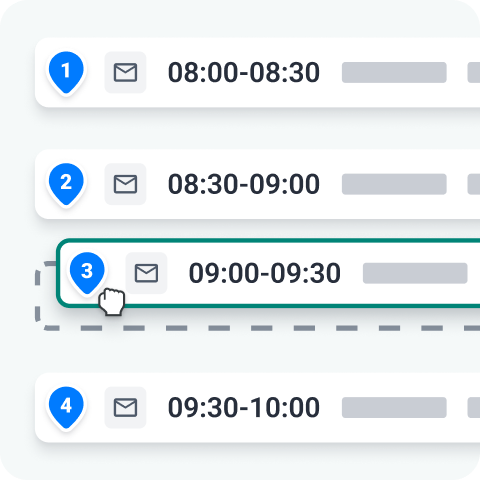
Routes need to be sequenced so that every stop is reached within its promised window – for example, your order may be given a delivery window between 1pm and 2pm so that the customer is ready to either receive the parcel or proactively adjust their delivery preferences if they’ll be unavailable to receive their order during that time frame.
Vehicle capacity
Every vehicle has a maximum legal weight and volume it can carry, as defined by the vehicle manufacturer and national laws, such as the Maximum Authorised Mass (MAM) or Gross Vehicle Weight (GVW) in the UK. Route planning needs to match the total load for a route to the capacity of the vehicle assigned to it – otherwise deliveries get left behind, or a vehicle is sent out under-loaded when it could have taken more.
Driver working hours
Drivers, particularly those driving HGVs, are subject to legally mandated working hours and break requirements. A route plan that looks efficient on paper but breaches these rules is a compliance risk that can lead to severe financial penalties, license revocations and safety hazards.
Stop duration
Not every stop takes the same amount of time. Unloading a pallet takes longer than handing over a parcel, and some sites require additional time for signatures, checks or access. Route plans need realistic stop durations built in, or the whole schedule will lose track of time as the day goes on.
If you’re delivering big and bulky items, you may also need to factor in additional stop duration times when planning routes. Furniture and appliances for instance, may have added-value services applied to them like installation, unpacking, package removal and assembly. You may also need to allocate special instructions to those particular stops such as delivery to room of choice.
Traffic and road conditions
Historical and live traffic data allow a route plan to accurately reflect how long a journey will actually take at a given time of day, rather than assuming these roads will be free-flowing. This matters for routes running through town centres with heavy footfall or near schools or other events during peak hours.
For more information on this, check out our article on how traffic affects delivery times
Vehicle restrictions
Low bridges, weight limits, width restrictions and urban access rules (such as low-emission zones) all affect which roads a given vehicle can legally and physically use.
A route that’s fine for a small van might be entirely inaccessible for a 7-tonne truck, which is a common issue with commercial map planners like Google maps and Waze which don’t account for HGV-specific vehicle dimensions and weights, since they’re purposes built for consumer vehicles.
For more information, read our post on planning safer HGV routes to avoid low bridges and restricted roads.
Customer priorities
Some customers, due to contractual SLAs or account value, need to be prioritised over others, and a route plan needs a way to reflect that rather than treating every stop identically.
Depot locations
For businesses running multiple depots or warehouses, deciding which depot a delivery should originate from can significantly affect total drive time. Route planning needs to consider depot location as a variable, not a fixed starting point.
Collection and delivery requirements
Many operations combine deliveries with collections – returning packaging, collecting empty pallets, or handling reverse logistics. In these circumstances routes need to account for both legs of the job, not just the outbound delivery.
Multiple vehicle types
Fleets are rarely uniform. A mix of vans, trucks and specialist vehicles (such as refrigerated units, tail-lift vehicles, HIABs), means route planning has to match each job to a vehicle that’s actually capable of delivering it or accessing the site.
Driver skills and capabilities
Some deliveries require specific certifications or experience – handling hazardous materials, operating specialist equipment, or simply familiarity with a particular type of site. Matching the right driver to the right route matters as much as matching the right vehicle.
Geographic considerations
Urban, suburban and rural delivery areas all behave differently. Dense urban routes might prioritise minimising drive time between closely packed stops, while rural routes often need to account for much longer distances between fewer delivery points.
Manual Route Planning vs Automated Route Optimisation
Many businesses plan routes manually, which works fine at a small scale. But as vehicles, stops and constraints multiply, there becomes a number of great reasons why you SHOULDN’T plan your delivery routes using spreadsheets.
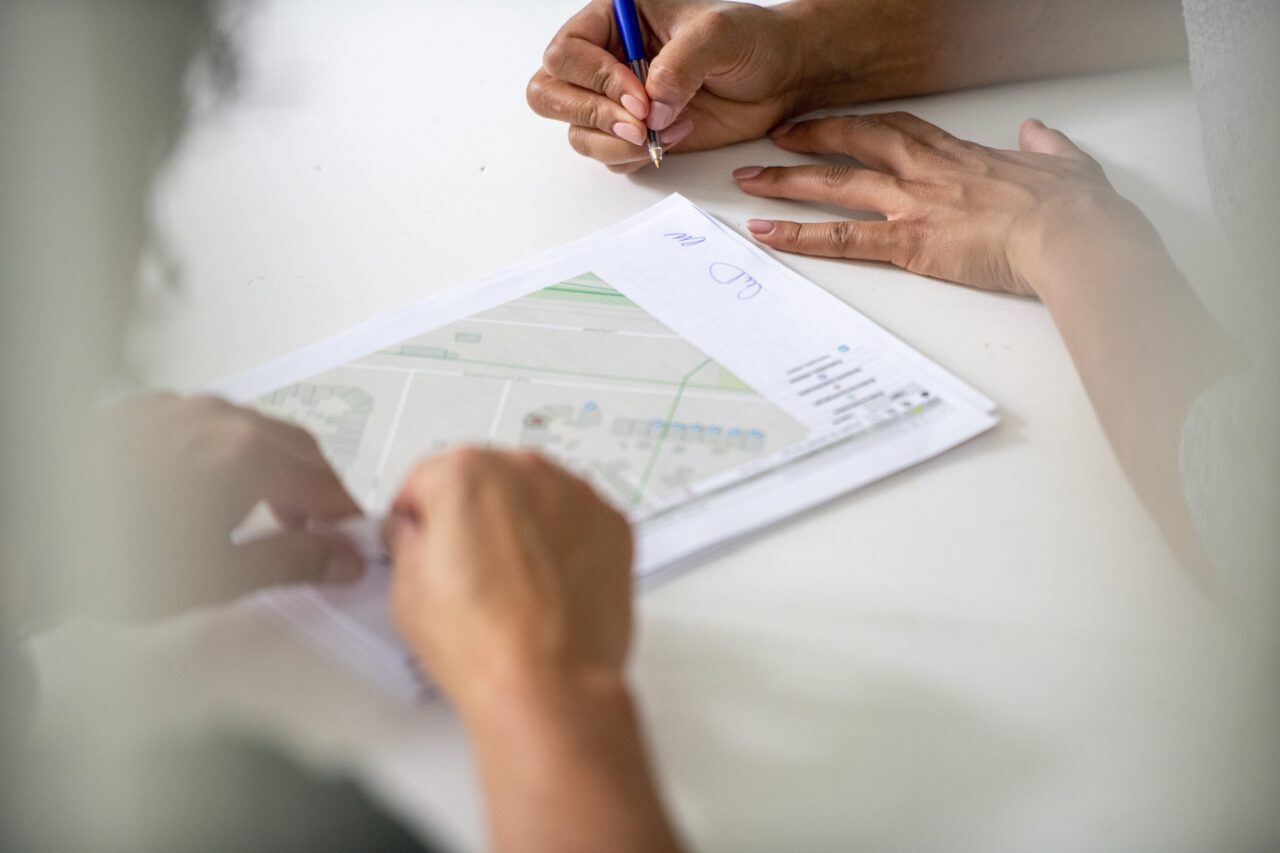
Human error creeps in when a planner juggles numerous stops and time windows – one wrong postcode or missed window can derail the whole day.
As stop counts grow, sequencing gets exponentially harder.
Ten stops, a planner can order sensibly.
Hundreds or thousands, across a fleet with varying capacities and time windows, is a different problem and a genuinely difficult one without using specialist software.
Manual processes are slow to adapt: an unexpected breakdown often means replanning from scratch.
Visibility is poor too. Once a route is handed to a driver, the office has little insight until problems are reported by the driver, making the operation reactive as opposed to proactive.
None of this makes manual planning worthless, however. Experienced planners and drivers bring real operational knowledge, such as knowing difficult customers, roads to avoid, stops that will need extra attention or care, personal, lived-in instances that software doesn’t automatically know.
With this in mind, the most effective operations combine both: specialist route planning software for efficient, constraint-aware routing at scale, and experienced staff for judgement on the exceptions software can’t easily capture or react to.
Common Delivery Route Planning Mistakes (and Best Practices)
Planning routes based purely on distance
It’s a natural instinct to build a route around the shortest possible distance, and many basic planning tools use this premise as their default planning reasoning.
The problem is that distance alone ignores delivery windows, traffic patterns and stop duration – so the ‘shortest’ route on a map can in practicality be the slowest, or the one most likely to miss a promised delivery time.
The best practice is to utilise software that plans around total drive time and constraints together, not distance in isolation: genuinely efficient routing balances distance against time windows, traffic and stop duration.
Ignoring delivery time windows
Some route plans are built around what’s geographically logical, without properly weighting the delivery windows customers have been given. This tends to be a common issue when time windows are treated as a nice to have rather than a hard constraint, resulting in missed windows, frustrated customers and, in B2B contexts, potential SLA breaches.
Time windows should be treated as a core constraint from the outset, not an afterthought applied once the route is already built.
Failing to account for service time
Every stop takes time beyond simply arriving, actions such as unloading, obtaining a signature, navigating a site all add additional minutes to the clock. When routes are planned assuming every stop takes the same, often optimistic, few minutes, the whole day’s schedule slips further behind with each stop. Building realistic, stop-specific service times into the plan keeps the rest of the route achievable and estimates much more accurate.
Overloading vehicles
Under pressure to fit as many deliveries as possible into a route, it’s easy to load a vehicle beyond a sensible working capacity – even if it’s technically within the legal weight limit. This leads to slower loading and unloading, higher fuel consumption, and in some cases, deliveries that simply can’t be completed and have to be rescheduled. Matching planned load to realistic vehicle capacity, with some additional breathing room avoids these issues.
Not accounting for traffic
Routes planned using straight-line distance or free-flowing travel times will consistently underestimate how long a journey actually takes during peak hours. Drivers fall behind schedule almost immediately, and that delay compounds across every remaining stop. Using live and historical traffic data when building routes produces schedules that are actually achievable.
Creating unrealistic driver schedules
When a route plan doesn’t leave enough time for breaks, traffic or the odd difficult stop, drivers are set up to fail before they’ve even left the depot. Over time, this leads to driver frustration, rushed deliveries and higher staff turnover. Building in realistic buffers – and respecting legally required working hours and breaks – protects both compliance and driver morale.
Failing to account for vehicle restrictions
Sending a large vehicle down a road with a low bridge, a weight restriction or no HGV access is more common than it should be, particularly when routes are planned using standard car-based mapping tools. The consequences range from wasted time rerouting to genuine safety incidents. Route planning needs vehicle-specific restriction data, not generic road mapping.
Not reacting to failed or delayed deliveries
A failed delivery early in the day doesn’t just affect that one stop – if it isn’t dealt with, it can throw off the rest of a driver’s schedule, or simply get forgotten until the end of the day. Best practice is to have a clear process for redirecting or rescheduling failed deliveries in real time, rather than treating them as an end-of-day admin task.
Poor driver adoption
Even a well-optimised route is only as good as a driver’s willingness to follow it. If drivers don’t trust the system, because early routes were unrealistic, or the application is clunky to use – they’ll quietly revert to their own way of doing things, undermining the value of the whole system.
Involving drivers in rollout, listening to their feedback, and making sure early routes are genuinely achievable all help build trust in the system.
Not reviewing route performance
Many businesses plan routes every day but never analyse how those routes actually performed. Which stops consistently ran late? Which routes deviated furthest from the original plan? Where did drivers frequently go off-script?
Without this feedback operations are at risk of consistently making the same mistakes. Regularly reviewing route performance against the plan is what turns route planning into an improving and evolving process that operates as it is intended to.
Delivery Route Planning for Different Industries
The core principles of route planning stay the same across sectors, but the priorities and constraints shift significantly depending on what’s being delivered.
Retail, e-commerce and online marketplace delivery route planning
Retail, e-commerce and online marketplace delivery is typically high volume with narrow delivery windows. Customers expect specific time slots, accurate ETAs and real-time delivery tracking, and they notice (and often complain) when any of these expected customer-facing features are missing.
In this context, route planning needs to handle large numbers of stops efficiently while keeping enough flexibility to accommodate same-day or next-day demand spikes.
- Tight, customer-facing delivery windows
- High stop density in urban areas
- Failed delivery and re-attempt management
- Returns and reverse logistics
Food and drink delivery route planning
Food and drink deliveries are governed by sell-by dates (or shelf lifes), temperature control and precise timing – a restaurant expecting a delivery before opening has no flexibility if a route runs late.
- Strict, non-negotiable delivery windows (particularly for hospitality customers)
- Temperature-controlled vehicles and cold chain integrity
- Short shelf-life products that can’t sit on a vehicle for long
- Frequent, smaller-volume drops rather than fewer, larger ones
Explore route planning software for the food & drink industry
Builders’ merchants and construction delivery route planning
Construction and builders’ merchant deliveries often involve heavy, bulky items and challenging site access. A standard van route simply doesn’t work when a delivery requires a HIAB crane or a Moffett forklift to unload.
- Vehicles fitted with specialist unloading equipment
- Site access restrictions (narrow lanes, weight limits, working hours on site)
- Coordinating delivery timing with site readiness
- Heavier loads that limit the number of drops per vehicle
Explore route planning software for builders’ merchants and construction industry
Healthcare and pharmaceuticals delivery route planning
Healthcare and pharmaceutical delivery combines strict compliance requirements with genuine urgency – a delayed delivery can have a direct impact on patient care.
- Temperature control and chain-of-custody tracking for sensitive products
- Strict security and handling requirements
- Time-critical deliveries that may need to override the standard plan
- Proof of delivery and audit trail requirements
Explore route planning software for the healthcare & pharmaceutical industry
Wholesale and distribution delivery route planning
Wholesale and distribution businesses typically deliver to a consistent, recurring set of B2B customers, often on a fixed schedule. The focus tends to be on frequency and reliability rather than narrow time windows.
- High-frequency, repeat delivery patterns
- Larger drop sizes and mixed vehicle capacity
- Consolidating orders efficiently across a regular customer base
- Managing collections (empty pallets, returns) alongside deliveries
Explore route planning software for the wholesale & distribution industry
Transport and logistics / 3PL delivery route planning
Third-party logistics providers and courier companies typically manage a highly varied client base, each with different service level agreements. Route planning needs to flex around different client requirements while keeping the whole operation efficient.
- Diverse fleets suited to different client needs
- Multiple, sometimes conflicting, client SLAs
- Mixed load types across a single route
- High reliance on accurate, real-time visibility for client reporting
Explore route planning software for the Transport/Logistics/3PL industry
What to Look for in Delivery Route Planning Software
Choosing route planning software depends on finding the right features and capabilities for your operation. There is no one-size-fits-all solution, but certain key features of delivery route planning consistently matter.
Multi-stop optimisation is a necessity – the software should be able to calculate efficient sequences across numerous stops and vehicles at once, not one route at a time while respecting time windows, vehicle capacity, and driver working hours.
Customer notifications and proof of delivery integration also keeps customers informed and closes the loop between planning and execution.
Route planning tools should also integrate easily with a broad range of other software. Connecting via APIs to popular TMS, ERP, order management and other systems avoids manual re-entry and disconnected workflows. Reporting and analytics tools also turn daily routes into data for improving future planning, while mobile apps give drivers navigation, stop details and real-time issue reporting.
Finally, scalability within these connected softwares ensures a tool that works for ten vehicles keeps working smoothly if the fleet grows to fifty or a hundred, so there are no points of friction as business grows.
Measuring the Success of Route Planning
Improving your route planning process only means something if the success can be measured.
A handful of KPIs give a clear, ongoing view of whether route planning is actually improving the operation. Here are the most common indicators for measuring the success of a planned route:
| KPI Type | Description |
|---|---|
| Miles per delivery | A falling trend generally indicates more efficient routing and less wasted mileage. |
| Deliveries per vehicle | Shows how much capacity is being used across the fleet; a rising trend suggests better utilisation without increasing the number of vehicles. |
| Deliveries per driver | Reflects driver productivity and how efficiently their working day is being used. |
| Fuel consumption | One of the most direct financial indicators of routing efficiency. |
| Cost per delivery | Typically combines factors such as fuel, driver time and vehicle wear into a single figure that reflects overall efficiency. |
| On-time delivery percentage | The clearest measure of whether the plan is actually achievable and being followed. |
| Vehicle utilisation | Shows whether vehicles are being loaded close to capacity, or running with unused space. |
| Driver utilisation | Indicates whether working hours are being used productively, rather than lost to inefficient routing or unrealistic scheduling. |
| Failed delivery rate | A high rate often points to poor time-window planning, inaccurate addresses, or unrealistic scheduling. |
| Average route duration | Helps identify routes that are consistently overrunning against their planned length. |
| Average stop duration | Highlights where planned service times don’t match reality, throwing off the rest of the schedule. |
| Empty miles | Distance driven without a revenue-generating stop attached; a key target for reduction. |
| Customer complaints | A lagging but nonetheless important indicator of whether operational improvements are actually being felt by customers. |
Tracked consistently, these metrics turn route planning into something that can be actively managed and improved over time.
Related Resources
- What is route planning?
- What are the Differences Between Route Planning & Route Optimisation?
- Integrating Route Planning Software with Existing Business Systems
- Reasons you SHOULDN’T Plan Delivery Routes on Spreadsheets
- How to Use Route Planning Software to Plan More Efficient Delivery Routes
- How Does Traffic Affect Delivery Times?
- What are Empty Miles in logistics?
- What is a ‘Milk Run’ in logistics?
- How to Plan Multi-drop Delivery Routes in Google Maps
- Route Planning: How to Save Time, Money (and the Planet)
Delivery Route Planning FAQs
For most businesses with more than two or three vehicles, the best way is using dedicated route optimisation software. This automates the complex calculations and integrates directly with your existing order management systems.
Yes, for very simple routes under 10 stops, it is possible. However, planning delivery routes on Google Maps has significant limitations, such as a lack of vehicle capacity planning and the inability to optimise for specific time windows.
It uses advanced algorithms to analyse multiple variables, including distance, time, vehicle size, and driver hours, to find the most efficient sequence of stops for the entire fleet.
The primary factors include traffic congestion, weather conditions, vehicle size constraints (such as low bridges), driver rest requirements, and customer-specified delivery times.
By integrating your routing software directly with your ERP, WMS, or other systems, you eliminate manual data entry, which is the leading cause of routing errors.