If your delivery drivers are still leaving the depot with physical paper Proof of Delivery forms, or if your team relies on a messy mix of spreadsheets and WhatsApp groups, your profits are eroding every single day and on every single delivery run.
Common issues such as lost paperwork, unreadable handwriting, customer disputes over missing items, and delayed information being returned to the warehouse for invoicing don’t just create administrative issues – they actively drain your operational margins.
Logistics continues to evolve with customers now expecting absolute transparency from the moment they make a purchase to the point that their order is delivered, be that through comprehensive order and delivery tracking or irrefutable evidence that a delivery has been completed.
Upgrading from outdated paper run sheets to electronic Proof of Delivery (ePOD) isn’t just about saving paper; it’s about eliminating the operational blind spots that slow business down and eat into your bottom line.
Here’s all you need to know about the benefits of opting to use digital Proof of Delivery against obsolete paper forms or their equivalents with examples of what a typical ePOD application should offer, for further context..
What is electronic Proof of Delivery (ePOD)?
Electronic Proof of Delivery (abbreviated to ePOD), replaces physical paper Proof of Delivery forms, signatures, clipboards, and other types of manual run sheets with a real-time digital record of every delivery event.
Stream has been developed as an event-based application. Events can be captured right down to individual line item level.
This granularity is exceptionally useful across most industries Stream works across, but particularly in high compliance sectors such as pharmaceutical logistics and wholesale distribution.
Delivery events captured in Stream include (and in no particular order):
| Event | Description |
|---|---|
| DELIVERY DETAILS CHANGED | Delivery details have been changed |
| ARRIVED | Delivery driver has arrived at delivery point |
| CANCELLED | Order has been cancelled |
| DELIVERY | Delivery completed |
| DELIVERY FAILED | Delivery has failed |
| ITEM DELIVERY FAILED | As Stream is granular to individual line item level, an event when a particular item could not be delivered is possible, i.e. the order contains multiple items. |
| DELIVERY WITH ISSUES | Delivery completed, but with issues. |
| ITEMS SCANNED ON HAND | Item on order has been scanned and is on hand for delivery. Learn more about Stream’s barcode scanning capabilities. |
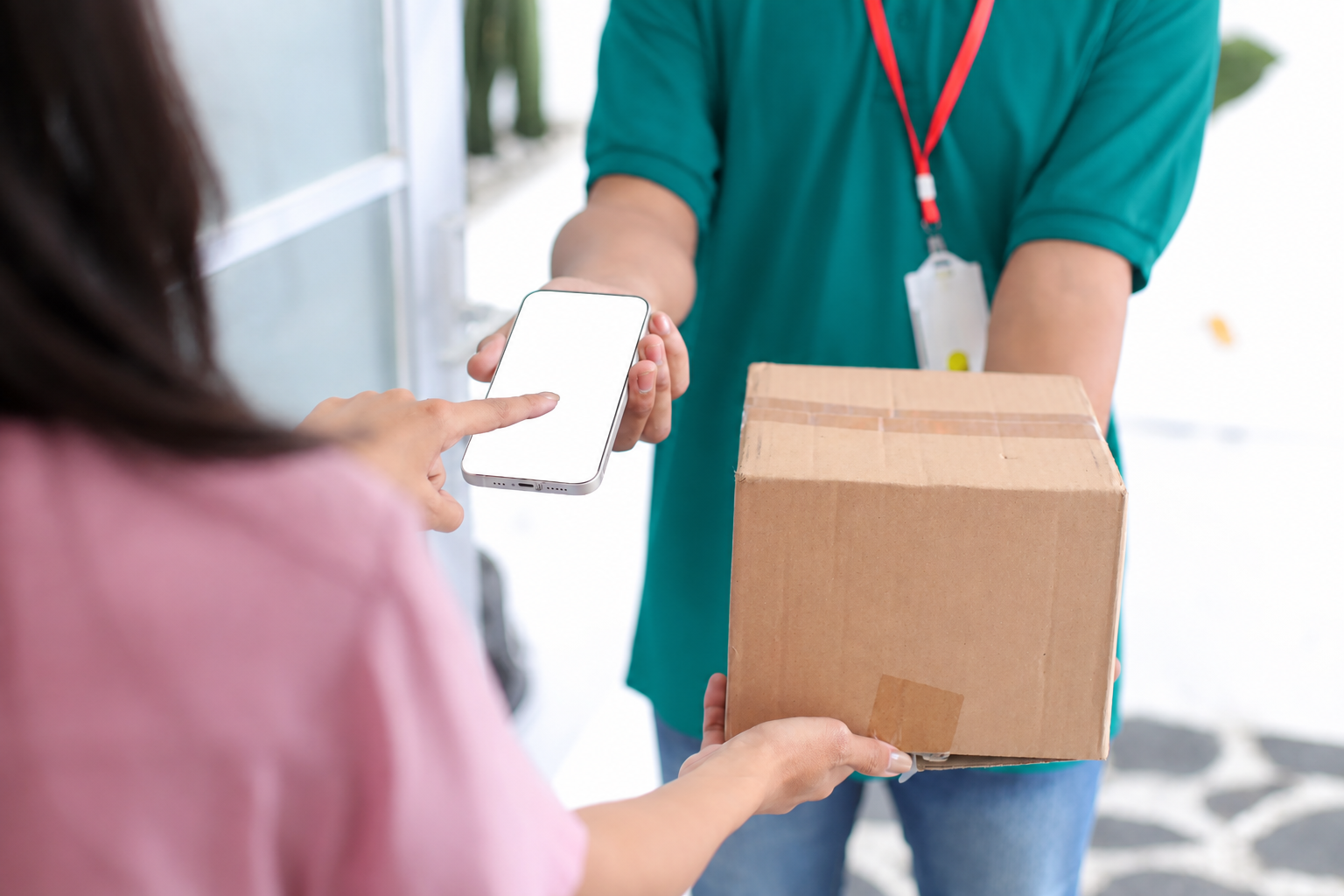
When a driver uses an ePOD system, like the Stream ePOD app, a back-office gets immediate, end-to-end visibility into exact delivery timestamps, item-level order statuses, digital signatures, and geotagged photo evidence captured at the doorstep to provide irrefutable proof that an order has been successfully delivered as expected.
Irrefutable proof of delivery and the delivery events detailed above are especially important if you’re an operator with an in-house logistics fleet looking to scale your marketplace sales as Stream is a recognised carrier on a growing list of marketplaces including Amazon, eBay and Temu.
Rather than waiting for paper manifests to return to the office at the end of the day, digital delivery data moves instantly from where the driver has captured the information.
Your back office can be alerted to any delivery issues, such as missing items or inaccessible properties, instantaneously, rather than waiting for the paper Proof of Delivery to be hand-delivered back by the driver.
The irrefutable delivery data is securely stored in the cloud, giving stakeholders an easily accessible, searchable audit trail to resolve customer disputes instantly without filing physical paperwork away in cabinets.
Upon completion, applications like Stream can automatically email the end customer their proof of delivery link, review requests, or feedback forms, which is ideal for B2C operations.
Business partners and distributors can also access ePODs directly through their portal logins, cutting out inbound queries and manual admin effort.
It is worth noting here that the Stream driver app is available for both Android and iOS devices. Though drivers will be able to scan barcodes with any smartphone, capture ePOD and complete vehicle walkaround checks, we would recommend using a more specialised system, typically through a rugged handheld device or phone to a central system.
Why paper Proof of Delivery hurts business in comparison to digital
In the digital age there are still, surprisingly, logistics operations that rely on paper Proof of Delivery simply out of habit.
It’s familiar, it’s what their staff and drivers have always used, and switching feels like somewhat of a hassle.
But paper comes with a host of red flags: it is inherently fragile, easy to misplace, and quickly takes up storage space in your office cupboards when delivering at scale. Perhaps most importantly, a paper run sheet is completely disconnected from the office the moment the driver pulls out of the depot; that information is beholden to the paper it is written on.
The messaging app trap: swapping one headache for another
Once operators realise that paper proof of delivery has quickly become a relic of a bygone era, other quick-fix solutions are explored – a WhatsApp group consisting of numerous staff members, a shared spreadsheet, virtually anything to get some visibility back while maintaining a sense of progression.
It feels like progress initially, but these methods introduce a new set of hidden costs and inefficiencies, despite what the illusion their cunningly contrived solution may tell them.
After a laborious scroll through hundreds of WhatsApp messages in the ‘Customer Deliveries’ group chat consisting of numerous staff members, the seemingly genius ‘quick fix’ the Logistics Manager suggested starts to look a lot like the paper problem in digital clothing.
It’s frustratingly slow to find the correct delivery information against 50 others that were delivered on the same day, and easy to lose track of.
There’s also a quieter risk sitting underneath it: customer names, addresses, and delivery photos ending up stored on drivers’ personal phones.
From a GDPR compliance standpoint WhatsApp is not suitable for sharing customer data, addresses, or access codes with employees due to issues surrounding data control, stolen devices, and WhatsApp’s terms of service.
Dedicated electronic Proof of Delivery systems are purpose built to avoid these issues entirely and store data according to the law and GDPR practices.
Real-world ePOD applications across industries
Whether an operation runs B2C or B2B deliveries, replacing paper run sheets with a digital workflow removes friction at almost every touchpoint, particularly the final mile.
B2C: proving it arrived in one piece
In home delivery sectors like furniture, large appliances, and general retail, the moment of delivery is where delivery disputes are typically won or lost.
While general parcel delivery failure rates hover around 5% to 7% and big-ticket home delivery faces significantly higher friction.
Up to 7% furniture deliveries arrive damaged (scuffed, scratched, or broken), making transit/doorstep damage the leading driver of post-delivery claims.
Capturing timestamped photographic evidence and a digital signature before and after delivery, or for white glove operations and installation, these irrefutable methods of data capture give a business hard proof evidence that an item arrived in perfect condition – protecting against fraudulent damage claims that would otherwise come down to one person’s word against another’s.
Particularly in the age of ever-growing porch piracy – the theft of packages and parcels left unattended on a front doorstep, porch, or entryway after commercial delivery.
B2B: signing off without a signature
Some B2B deliveries – like food and drink drop-offs at restaurants or automotive parts sent to garages – happen outside opening hours, when the location is unstaffed and no one can sign for them.
As a workaround, drivers log time-stamped proof of site access and capture photographic evidence of the successful product placement(s) directly, with no physical signature required. This proof is then instantly accessible in digital form to all of the stakeholders, offering peace of mind and security throughout the process.
How an ePOD app replaces the clipboard: the five-step driver workflow
A well-designed ePOD driver app doesn’t just digitise a paper form; it enforces operational compliance before the vehicle has even left the depot.
Stream’s driver workflow follows five key steps for a safe and secure workflow:
- Secure driver login – the driver authenticates via individual credentials, with password resets handled securely through email.
- Mandatory vehicle safety checks – time-gated checks are run via vehicle registration search. If a major defect is flagged, the vehicle’s status is set to Unusable and Stream automatically blocks the route from departing until a planner reassigns a safe vehicle.
- Depart route & live customer tracking – the timestamped departure activates live ETAs, stop counts, and dynamic map tracking for internal monitors and end-customers alike.
- Doorstep delivery & reconciliation – on arrival, the driver reconciles items on-site, whether that’s confirming a full delivery, adjusting quantities, or splitting line items for a partial drop.
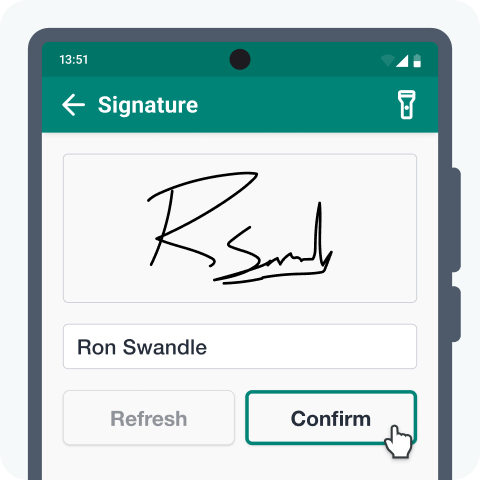
- Digital sign-off & cloud sync – a signature or photo is captured, and completing the drop syncs the data instantly to Google Cloud Storage, triggering automated customer emails and updating any connected partner portals.
Using electronic Proof of Delivery to manage exceptions without the guesswork
When a paper run sheet comes back with an ineligible scribbled note reading ‘1 item missing,’ office staff, if they can even read the scribble in the first instance, are left guessing or reading between the lines.
Digital ePOD applications, like Stream, replace that guesswork with two precise digital methods for handling item quantity issues at the depot or during delivery.
Method 1: Quantity adjustment
The quantity adjustment feature is best suited to bulk and weight variations. If a driver identifies a shortage on-site, such as delivering 9,500 kg of wheat instead of the anticipated 10,000 kg, the quantity is adjusted directly within the line item, which proportionately scales down the total weight.
The missing volume is permanently written off and removed from the system.
Method 2: Line-item splitting
This is the preferred approach for missing goods and re-deliveries.
If a driver finds one item damaged or missing out of a multi-quantity order, such as one desk out of a two-desk delivery, the line item is split in the app into two separate single-item lines.
One is marked delivered ok; the other is marked failed with a designated reason code.
The completed item is registered against the system as successfully delivered, while the failed item stays active in the system so the office can replan a second delivery attempt without having to start from scratch.
Loading errors are a common source of friction that can cause items to go missing. Stream’s Driver App solves this with meticulous barcode scanning during both loading and unloading, ensuring every item is accounted for before departure or delivery.
Warehouse or depot teams scan goods as stock arrives, and drivers perform scan-to-van checks using Stream package labels in reverse stop order for efficient ‘first-in, last-off’ loading, making missed item errors or issues significantly more infrequent in comparison to their paper-based counterparts.
Built to match the pace of the operation
For high-volume drops, Stream can be configured with a shortened workflow, bypassing screen confirmations, skipping completed stop lists, and making photo or signature steps optional to keep drivers moving.
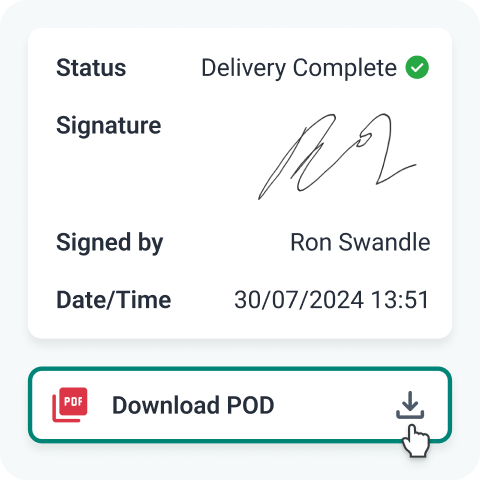
Certain conditional logics can still require a photo automatically if a hazard is flagged, and clean, customer-facing PDFs are output directly to Google Cloud Storage regardless of which workflow is running.
For multichannel sellers, real-time webhooks send automated marketplace tracking ‘Dispatched’ and ‘Delivered’ updates to major marketplaces like eBay, Amazon, or Temu the moment a driver completes a delivery drop, protecting seller ratings without anyone having to manually input the data.
Conclusion
Paper run sheets, spreadsheets, and popular messaging apps like Whatsapp might each solve a small part of the proof of delivery puzzle, but relying on them significantly harms fleet productivity and delivery management, while quietly draining profit margins over time.
Not to mention further issues when a customer dispute lands, a GDPR question gets raised, or a driver’s scribbled notes turn out to be the only record of what actually happened at the door.
The last mile, arguably the most important aspect of the supply chain, is where business reputations are won or lost and customer trust is earned, not assumed.
Replacing these outdated methods with a purpose-built, digital ePOD solution hands operational control back to the business, with error-proof driver workflows and full visibility over the delivery supply chain, from depot to doorstep.