
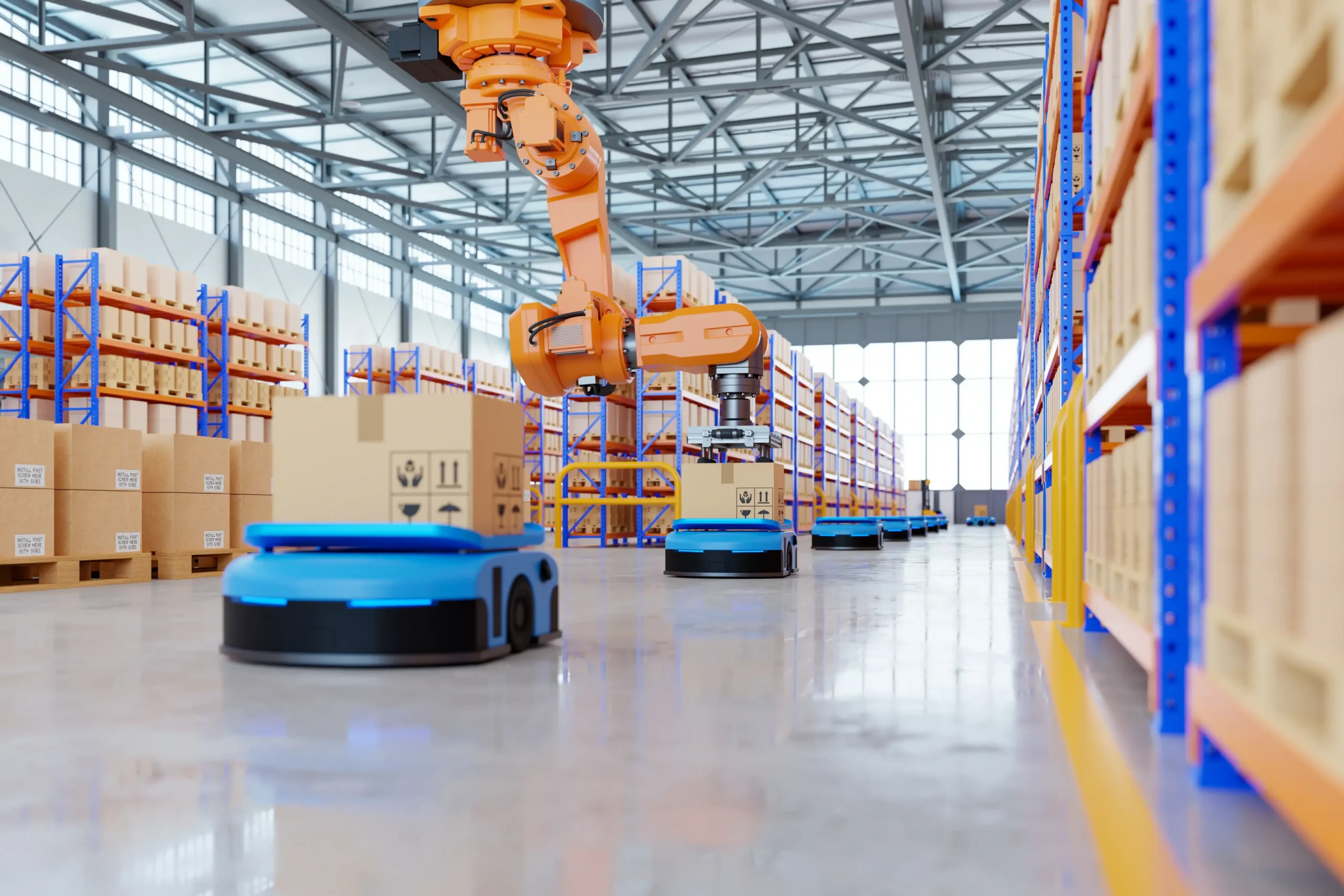
Intralogistics is the crucial, often unseen, management system that keeps modern supply chains running smoothly.
In its simplest terms, intralogistics refers to the management, optimisation, and automation of all internal production and distribution processes that occur within the ‘four walls’ of a facility – such as a warehouse, distribution centre, or fulfilment centre.
The concept of intralogistics is focused entirely on ensuring the flow of both physical goods and information as efficiently as possible from the moment products arrive at a facility until they are dispatched.
Why intralogistics has become an integral part of modern supply chains
Consumer expectations for speed, accuracy, and immediate delivery have never been higher.
When a customer orders a product online, the speed and efficiency of the entire process – from clicking the buy button to order confirmation and final delivery – is dictated by the effectiveness of the seller’s intralogistics.
A high-performing intralogistics system is essential because it ensures operational efficiency by minimising wasted time, space, and resources during storage, picking, and packing.
It is also responsible for maintaining inventory accuracy by providing real-time visibility into stock levels and enabling faster fulfilment necessary to meet tighter delivery windows, especially in the era of same-day and sub-hour delivery services.
The COVID-19 pandemic significantly accelerated this demand, permanently shifting consumer behaviour towards stay-at-home deliveries and creating the conditions for shorter lead times and greater immediacy, particularly in the food and drink industry.
The three key trends transforming modern intralogistics
To meet these demanding expectations, companies are continually innovating their internal logistical processes.
Three key emerging trends are defining the future of intralogistics: Micro-Fulfilment Centres (MFCs), warehouse automation, and eGrocery, which we shall explain and analyse accordingly.
1. Micro-Fulfilment Centres (MFCs)
Micro-fulfilment centres, often abbreviated to MFCs, are small-scale fulfilment facilities, often strategically placed near high-demand areas in large cities.
They serve as a logistical foundation for instant delivery models by moving products as close to customers, and therefore demand zones, as possible.
Many companies utilise MFCs in the form of dark stores – large retail facilities that look like supermarkets but are closed to the public and function solely for fulfilling online orders.
By placing inventory closer to the customer, often only a few kilometres away, MFCs drastically cut down the time required for the last mile of delivery, making 10-minute grocery delivery models possible.
2. Warehouse automation
Automation, a key buzzword in the continued AI revolution, involves removing manual processes and utilising advanced technology to improve efficiency and scalability.
This is critical for handling massive volumes of complex orders quickly.
Advanced technologies like Artificial Intelligence (AI) and Machine Learning are used for demand forecasting and logistics monitoring, predicting what customers will order and when, which optimises stock balance and greatly reduces waste.
AI also directs picking and packing to ensure efficiency and product safety.
Companies utilise advanced robotics, where automated bots and sophisticated conveying systems manage the storage, movement, and retrieval of items on the warehouse floor, constantly recording data to minimise downtime and ensure continuous operation.
Some organisations even use sophisticated simulations, known as digital twins, to create exact virtual replicas of their fulfilment centres to test new processes and uncover new efficiencies without disrupting real-world operations.
3. eGrocery
The fast expansion of the online grocery market is both a key application and a major driver of intralogistics innovation.
eGrocery demands exceptional efficiency due to the nature of the product, which includes perishables, short shelf lives, and a high volume of varied items.
Services focused on near-instantaneous delivery (like Getir) rely entirely on optimised intralogistics solutions – combining MFCs and automation – to provide the required speed and tight inventory control necessary to win consumers.
Companies in this sector are also leveraging streamlined intralogistics to manage inventory that might otherwise go to waste (due to short expiration dates or overproduction), allowing them to sell items at reduced prices whilst maintaining profitability.
Conclusion
Intralogistics has fast become a core component that powers the modern supply chain and directly influences the customer experience for the better.
The pressure of heightened consumer expectations for speed and immediacy – a trend significantly accelerated by the COVID-19 pandemic – has permanently elevated the role of internal efficiency.
The move towards Micro-Fulfilment Centres (MFCs) is closing the gap between inventory and demand, enabling next-generation instant delivery models. Simultaneously, the integration of advanced automation and AI is creating warehouses that are not only faster and more scalable but also predictive and highly resilient.
The rapid growth of eGrocery serves as a demanding proving ground, showcasing how the convergence of MFCs and automation can manage the complex requirements of perishable goods and high-volume, varied orders.
The competitive edge in modern commerce ultimately lies within the ‘four walls’ of the facility.
By implementing modern intralogistics, businesses are embracing a strategic asset that guarantees operational efficiency, maximises profitability and ensures near instant fulfilment.